Tembusu Institute's (SCTP) Bags Diploma will teach you the technical skills required to launch a career or start your own brand, such as bag-making, bag-design, and digital marketing.
The first school in Singapore to provide a full-fledged bag design & production course with industrial standard facilities and a studio environment. The (SCTP) Diploma in Bag Design and Product Development is an exciting design and production course that will encompass everything you need to know to start or supplement a business in bag design.
You will be starting with the fundamentals of materials, learning about the different types of leather and alternatives, their uses, and how to select them. After this, you will gain an understanding of the basic components and production methodology of common bag styles. You will be put under the guidance of expert trainers, where you will be shown and guided through the creation of a range of bag styles from small leather goods (wallets) to briefcases, totes & handbags.
Finally, you will stay up to date in digital marketing trends as you learn how to set up an e-commerce store and use search engine optimization techniques to promote your brand & expand your customer reach.
Full Time: 3.5
Part Time: 12
Blended
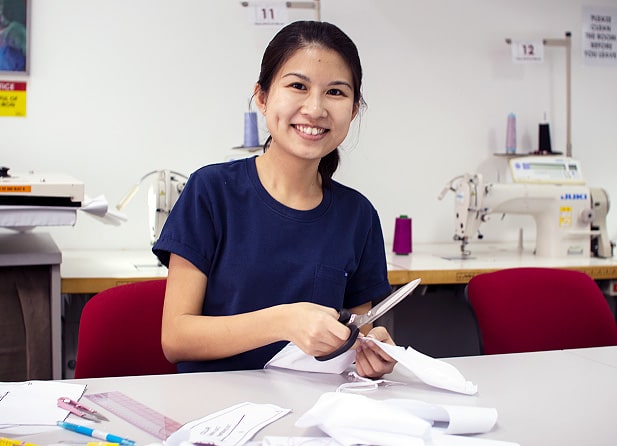
Everything you learn at Tembusu Institute can be applied to your professional life in fashion and will be taught by industry practitioners through interactive workshops, whether online or in Tembusu Institute's Sewing Labs.
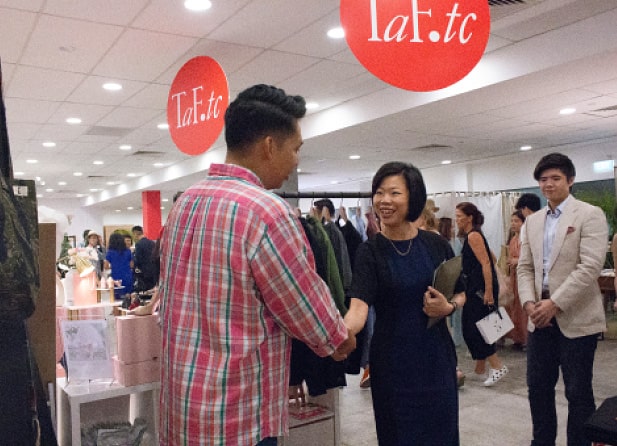
Our partners and advisors are as close to home as Thailand or Japan and as far as Italy or the UK. Tap into a professional community built over decades of industry immersion.
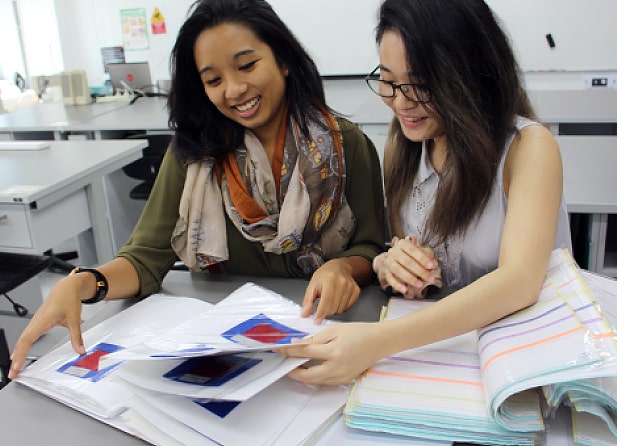
Our career support connects you to jobs available on the market, opportunities for further studies, and resources to help you start your own brand.
Students will be assessment via practical and written modes. Upon successful completion of relevant WSQ modules within the course, you will be awarded the Workforce Skills Qualification (WSQ) Statement of Attainment (SOA) by SkillsFuture Singapore. WSQ certification is nationally endorsed and recognised by industry partners. Upon successful completion of relevant non-WSQ modules within the programme, you will be awarded Tembusu's Certificate of Completion. Students who have successfully completed all modules within the course will be awarded the (SCTP) Diploma in Bag Design and Product Development certification by Tembusu. For more information, please go here to check our accreditations or to contact Louise Clement at louiseclement@tembusuinstitute.edu.sg.

Do take note of the following things you are required to have for both class and their assessments. Please check if all of these stated below are in working condition before registering for class.
Not at all! You can enrol for our Diploma programme without any prior experience, as long as you have a passion for fashion!
The courses are conducted in the form of lectures, discussions, demonstrations, case studies, practical exercises, and hands-on activities. You will then be assessed on the work you have done with a final evaluation at the end of every course.
As an Edutrust and Singapore Workforce Skills Qualifications (WSQ) certified training centre, with 11 top fashion schools recognising our Diplomas for accreditation programmes like Paris College Of Art and Atelier Chardon Savard, Tembusu continues to stay in line with leading national and international fashion industry standards.
Most definitely! Upon completion of your Diploma programme, you will be awarded a hardcopy WSQ Diploma certificate from us, and you can also access the softcopy via your MySkillsFuture portal!
The Diploma will be done offline at our Central Plaza campus (Tiong Bahru MRT) and Thye Hong Campus (near Redhill MRT).
The training provider may provide evidence of the trainee’s delivery of projects/services. The employment proof for self-employed individuals may include valid trade licence, contract for service, income statement, tax invoice/receipts billed to service buyers, list of client engagements and IRAS notice of assessment.
The Bags Diploma will be split into 5 main categories which will cover the fundamentals of bags, design & sketching, digital marketing, bag making, and a final capstone project to wrap up everything you’ve learnt in the Diploma. More details can be found above!
Yes we will! Whether it's through promoting your brand on our alumni portal THE LABEL SG, or providing mentorships and consultations to further your studies, we’ve got your back!
To facilitate SCTP outcomes tracking, training providers should obtain employment proof from trainees. The employment proof should capture the date of employment, job role/title, sector, name of company and its UEN. Training providers are required to assess if the employment is related to the SCTP course depending on the sector, job family or job role. The employment proof for employed individuals may include signed letter of offer, verification email/letter from hiring company and salary slip. The employment proof for self-employed individuals may include valid trade licence, contract for service, income statement, tax invoice/receipts billed to service buyers, list of client engagements and IRAS notice of assessment.
Placements for SCTP is defined as (i) Full-Time/ Part-Time employment; or self-employment (own business or freelance); or acceptance into Place-and-Train (PnT) programmes (e.g: Career Conversion Programme), and (ii) the employment was in a sector/ job family/ job role related to the area of training for the SCTP programme. For clarity, the trainee must be placed into a job between the point of course commencement to 6 months after completing the SCTP, Inclusions: Where company/ job family/ job role is related to the area of training i. Placement into a different company (trainee is employed at course start) ii. Placement into same company but different job role (trainee is employed at course start) iii. Placement into sister company of individual’s original company (trainee is employed at course start) iv. Placement into CCP (PnT) v. Self-employment: starting own business or freelance/gig projects Exclusions: • Placement into a job that is not related to training.